
6 Simple Side Hustles for Designers Who Want to Make, Not Manage

Updated: May 10
In this article we spoke about how to find time for your side hustles and goals in the evening.
But sometimes you don’t have a huge goal such as a career change, and don’t even want to work with clients in the evenings. You want to just do something small or creative on your own that will fill your bucket and maybe make you a little extra cash on the side.
That’s what this list of passive income side hustles is.
I’ve tried out a lot of these over the years.
They’re not huge money earners. But they could be fun to try out, teach you some lessons through experience that you can’t learn by just Googling or reading, and continue to return dividends in the future.
Trying out a product-based small business taught me invaluable lessons about business that you’ll have a hard time learning without experiencing them yourself - about profit and expenses, balancing production cost, how to price products, how much you’re willing to invest in marketing for how much potential reward...
As service providers, and especially as creatives, we don’t necessarily know a lot about how businesses run. We just want to make our clients look good. But that makes it hard to understand how our clients think about things (in addition to the difficulties in running our own businesses).
Gaining some personal hands-on experience in a low effort, low risk environment can be incredibly valuable in building empathy with your own design clients.
—
Another note - when I say “passive” I don’t mean it takes no work. But it does mean typically no work after the sale. As opposed to selling a service where the sale is just the beginning of the process, for these ideas the design work happens before the sale. Some of these are even set-it-and-forget-it, but not all of them.
A lot of online marketplaces have a ton of competition so the more frequently you post new products, the more people their algorithm shows your products to. Items not in a marketplace require you to spend your time marketing them…
Nothing that makes good money is truly no effort whatsoever, but they might be low in effort or high in fulfillment. That choice is ultimately up to you to decide.
And now, on to the ideas!
Selling on Online Marketplaces

1. Sell stock designs, illustrations, or photos
As someone who already has design skills, and possibly illustration or photography skills as well, this can be something easily up your alley.
The trick here is to do your research first - find out what’s trending on the platform of your choice, what keywords are being searched, and what’s selling. Research what strategies work for getting sales on each platform. Then find where there’s an intersection between what you enjoy creating and what people are looking for. (For example, I’ve found that Purim designs sell really well on Zazzle.)
Or you can just do it for the fun of it and create what interests you and see what happens.
It also pays to multiply your design - once you’ve already created it, add it to as many product types as you can to increase the chance of someone purchasing it.
Here are some sites to try out:
Stock DESIGN Sites
Stock PHOTO Sites
Stock ILLUSTRATION Sites
Adobe Stock
Shutterstock
CreativeMarket - you can also sell custom fonts and mockups on here as well

2. Sell art on Etsy (or your own website)
As an artistic person, you might enjoy other creative pursuits in your free time, and can potentially turn them into some side income as well.
Things like painting, drawing, or crocheting can be creatively fulfilling and provide opportunities for sales such as by selling prints, originals, custom artwork, templates, or even digital prints like posters and coloring pages.
As before, do your research to see how to best upload your files, keywords to use, best-practice for titles, and the best way to take product photos that are engaging.
Keep in mind that Etsy charges you a small recurring fee to upload each product (as of now, it’s $.20 per product every 4 months), so there’s a small risk involved.
3. Sell merch designs on Etsy (or your own website)
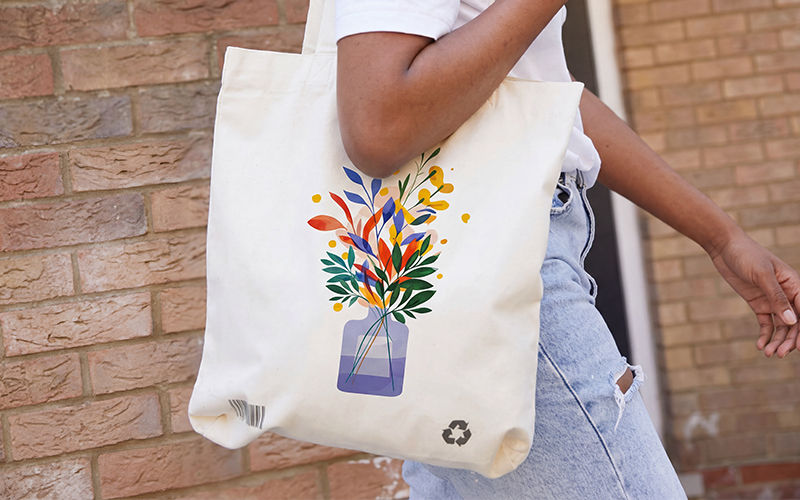
Similar to the two previous items, you can create your own designs and then sell them printed on products.
Using a print-on-demand service you don’t have to print them yourself, saving you any upfront costs - you only pay production costs when something sells. This obviously cuts into your profit margins (you only earn around 20% of each sale), but it also greatly reduces the risk involved in starting something fun that you might not want to invest in growing long-term.
Think products like mugs, water bottles, sweaters, t-shirts, notebooks, pillows, blankets, posters, etc.
It’s very similar to Zazzle, but on a different platform so your own brand and consistent style or theme can play a big part in the success of your products being noticed by customers in Etsy’s massive marketplace.
Here are some popular print-on-demand sites to look into:
Selling to Your Own Market

4. Create and sell Canva templates
Creating professionally designed templates can be a great intro product for prospects who either can’t afford your services right now or want to get a small taste of your work.
Think items like social post and story templates, flyer templates, logo templates, etc.
First choose a target audience and then brainstorm a list of items that many of them use regularly that aren’t that unique from one client to the next. Maybe that’s a flyer for a local shiur in a shul, or a weekly “trending items” email for an e-commerce business. You can then design these items with multiple design styles and images as templates that people can purchase to update themselves within Canva - totally passive to you, no work done on your end after their purchase.
You can also add alternate options of designs you’ve created for clients that they didn’t go with so they never saw the light of day (if your contract allows). You already have the design created, it’s just a matter of setting it up for sale.
You can potentially create an entire library of such items and turn them into a subdivision of your brand.
The most work done for this will be in the marketing side, getting people to even know that your library exists.

5. Set up a referral network
If you’re in a position where you refer clients to other service providers a lot, setting up a referral network could be a great idea for you.
In a nutshell: you reach out to a provider you trust that you would feel comfortable recommending to your clients and ask them if you can set up a relationship with them where you get a commission each time you send a lead their way that works out. This could work really well with people in peripheral industries to yours - think web developers, illustrators, copywriters, animators, brand strategists, SEO experts, etc.
It’s a win-win situation - they get more business and you make a little extra on the side.

6. Teach
Share your knowledge with the next generation of graphic designers.
If you’ve been designing for a while, you probably know things that those even just a few years behind you haven’t learned yet through life experience and mistakes.
Perhaps there’s a way you can share that knowledge:
Give a recorded webinar
Create a PDF guide or template
Write a weekly email newsletter such as on Substack
Create a course or program
Coach 1:1 or in a group
There are so many ways that your knowledge can help others - you just need to find the medium that works for you.
And the side hustle that earns the most money?
Raising your rates 😉
This article took you 5 minutes to read, but it took me 3 hours and 47 minutes to create. If you enjoyed, please consider sharing it with others.


